
Why Kids with ADHD and ASD Struggle on Family Trips and How to Make Them Easier
- Psyuni Group

- 6 hours ago
- 5 min read
A family trip can look fun on the calendar and feel impossible in real life. For many children with ADHD, autism spectrum disorder, or both, travel removes the very things that help them stay regulated: routine, predictability, familiar food, quiet spaces, and control over what happens next.
That does not mean trips are off the table. It means the plan needs to match the child’s nervous system, not just the adults’ itinerary.
Family trips often create the perfect storm
Travel asks kids to handle many hard things at once.
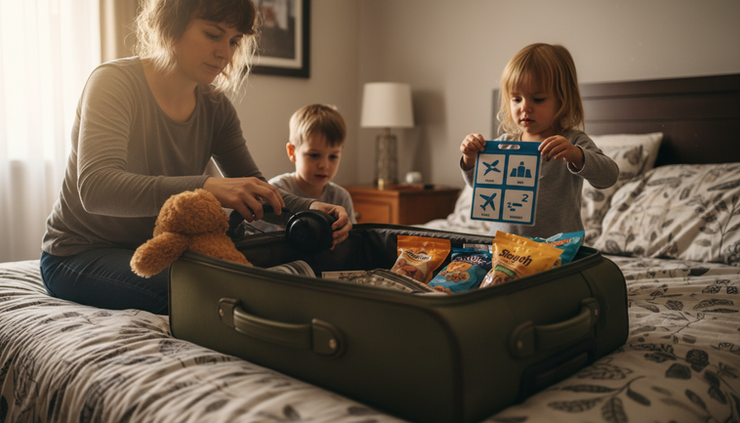
There may be early wake-ups, long car rides, crowded airports, bright lights, loud bathrooms, different beds, delayed meals, unfamiliar smells, and relatives who expect hugs. Even happy events can overload a child who processes the world intensely. A child may crave movement and novelty while also needing sameness and predictability. That can make trips feel confusing for everyone.
A child who does well at home may struggle on vacation because home is already adapted to them. The trip removes those quiet supports.
Behavior is often a signal, not the whole problem
Meltdowns, refusals, running away, arguing, shutdowns, and “rudeness” can be easy to read as defiance. On trips, they often mean the child has reached their limit.
This matters because punishment rarely solves overload. A better question is, “What demand, sensation, or uncertainty became too much?”
Sometimes the answer is simple. The child needs food, pressure, quiet, movement, or a clear explanation. Other times, the plan itself is too full.

Make the trip more predictable before leaving home
The best travel support starts before the bags are packed. Kids with ADHD and ASD often do better when they can picture what will happen.
Keep the plan concrete. Instead of saying, “We’re going on a fun trip,” show the steps.
Helpful tools include:
A simple visual schedule
Photos of the hotel, rental house, airplane, or relatives’ home
A countdown calendar
A short list of expected sounds, smells, and rules
A map or drawing of the route
Practice runs for unfamiliar steps
For example, if the trip includes flying, talk through the airport in order. Parking. Bags. Security. Waiting. Boarding. Seatbelts. Takeoff. Snacks. Landing.
Do not promise that everything will go smoothly. A better script is, “Some parts may be loud or slow. We will have headphones, snacks, and breaks.”
Choice also helps. Offer small decisions where possible:
Which comfort item comes in the backpack
Which snack goes in the travel bag
Which shirt feels best for the ride
Which activity starts first in the car
The goal is not to give the child full control. The goal is to give them enough control to feel safe.
Build regulation into the itinerary
Many family trips are planned around attractions, meals, and adult timelines. Kids with ADHD and ASD often need the schedule built around regulation first.
That may mean fewer activities. It may also mean planning breaks before anyone appears to need them.
A more supportive day might include:
One main outing
One predictable meal
Quiet time after a crowded activity
Movement before a long wait
A familiar bedtime routine
A backup plan if the first plan fails
For some families, the best travel rule is one big thing per day. A museum and dinner out may be enough. A theme park, restaurant, shopping stop, and late-night visit may be too much.
Pack a regulation kit that stays easy to reach. Good options may include:
Noise-reducing headphones
Sunglasses or a hat
Chewable jewelry or safe oral tools
Fidgets
Favorite snacks
Water
A small weighted lap pad, if already used safely
Comfort objects
A tablet with downloaded shows or games
Extra clothes without irritating tags or seams
Screens can be a useful travel tool. They do not need to be treated as a failure. For a child who is overwhelmed, a familiar show may provide predictability and reduce demands.

Plan for hard moments without shame
Even with good planning, hard moments can happen. A delayed flight, a crowded beach bathroom, or a surprise change in plans may push a child past their coping point.
Before the trip, decide how the adults will respond.
A simple plan can include:
Who stays with the child
Where the quiet place is
What words to use
What demands to drop
When to leave an activity
How to explain needs to relatives
During a meltdown, use fewer words. Public explanations can wait. Try short, calm phrases:
“You’re safe.”
“We’re going somewhere quiet.”
“No talking needed right now.”
“I have your headphones.”
“We can try again later.”
If relatives are involved, prepare them ahead of time. Clear expectations help more than long explanations.
You might say, “They may not hug hello, and that’s okay. They warm up better when people give them space.” Or, “We are keeping bedtime steady because sleep makes the rest of the trip possible.”
This protects the child and reduces pressure on the parents.
Keep some parts of home with you
A trip feels easier when a few routines stay the same. This is especially true for sleep and food.
Try to keep one or two anchors in place:
The same bedtime song or audiobook
The same breakfast food
The same pajamas
The same morning order
The same calming activity before bed
Food can be a major source of stress. Many autistic kids and kids with sensory sensitivities have a limited range of safe foods. Travel can shrink that range even more. Packing familiar foods is not “giving in.” It is a practical way to keep the child fed and regulated.
Sleep matters too. A child who is already stretched by travel may have less ability to cope after a late night. Building in rest may save the next day.

Easier trips are usually simpler trips
The most helpful shift is to stop measuring a trip by how much the family does. Measure it by how well everyone recovers, connects, and gets through the day with dignity.
For many kids with ADHD and ASD, easier travel comes from:
Fewer surprises
More visual information
Built-in breaks
Sensory tools
Flexible expectations
Safe food and sleep routines
Adults who can change the plan without treating it as a failure
A family trip does not have to look like anyone else’s trip to be worthwhile. Maybe the best memory is not the big attraction. Maybe it is a quiet swim, a picnic with familiar crackers, or a peaceful hour in the hotel room after a hard morning.
Make the plan smaller, clearer, and kinder. That is often what gives the whole family more room to enjoy being away together.


Comments