
Occupational Therapist Toilet Training Tips and Tricks
- Psyuni Group

- 10 hours ago
- 5 min read
Toilet training can feel simple until it is happening in real life. A child may sit happily one day, refuse the next, or have the skill in one bathroom but not another. From an occupational therapy lens, toileting is not just a behavior. It is a mix of body awareness, motor skills, sensory processing, routine, communication, clothing management, and confidence.
These occupational therapist toilet training tips and tricks focus on helping the child feel safe, capable, and ready. This article is informational only and does not replace care from a pediatrician, occupational therapist, or other licensed provider.

Start with readiness, not a calendar
Age can be a rough guide, but readiness matters more. Some children show interest early. Others need more time, especially if they have sensory differences, developmental delays, anxiety, constipation, or communication challenges.
Look for a few of these signs before pushing toilet training hard:
Staying dry for longer periods during the day
Noticing when they are wet or soiled
Hiding, pausing, or changing posture before going
Showing interest in the bathroom or flushing
Following simple one-step directions
Pulling pants up and down with some help
Tolerating sitting on the toilet or potty for short periods
A child does not need every sign. The goal is to see enough body awareness and cooperation to build from.
If a child cries, stiffens, runs away, or panics near the toilet, pause and work on comfort first. Sit on the closed lid. Read a book in the bathroom. Let them flush from a distance. Practice washing hands without expecting them to pee. These small steps help the bathroom become familiar instead of stressful.
Build the body skills that toileting requires
Toileting uses more motor skills than many people realize. A child needs to walk to the bathroom, manage clothing, climb or turn safely, sit with balance, relax their body, wipe, flush, and wash hands. That is a lot.
An occupational therapist often looks at the setup first. A child who feels unstable on the toilet may hold their breath, grip the seat, or avoid relaxing. Good posture can make a big difference.
Aim for this position:
Feet flat on a stool or the floor
Knees slightly higher than hips
Hips, knees, and ankles supported
Back upright or slightly forward
Hands resting on thighs or holding a small book
A dangling-leg position can make toileting harder. A sturdy step stool gives the body a sense of safety and support.

Clothing practice also matters. Choose pants with elastic waistbands during training. Skip overalls, tight leggings, stiff buttons, and complicated snaps until the child has the basic routine down.
Practice clothing skills outside the bathroom when there is no pressure. Try quick games like:
Pull pajama pants up and down over shorts
Practice sitting and standing with pants at the knees
Put a small sticker on the front waistband so the child knows which side faces forward
Use a mirror for visual feedback
These practice moments build independence without turning every bathroom trip into a test.
Use sensory supports to lower resistance
Many toilet training struggles have a sensory piece. Bathrooms can be loud, cold, echoey, bright, slippery, or full of strong smells. The toilet opening may feel scary. Flushing may be too loud. Sitting still may feel uncomfortable.
Try adjusting the environment before assuming the child is being difficult.
Simple sensory-friendly changes include:
Use a soft seat insert if the toilet feels too large or cold
Let the child flush after leaving the room if the sound is upsetting
Add a night-light or softer lighting
Keep wipes at room temperature when possible
Offer a small fidget, board book, or song during sitting
Use a visual timer for short sits
Keep the bathroom uncluttered and predictable
Some children need to move before they can sit. Try animal walks, wall pushes, jumping on a safe surface, or carrying a small laundry basket before bathroom time. Heavy work can help the body feel organized.
A calm body has an easier time noticing signals, sitting safely, and releasing pee or poop.
Watch for constipation signs too. Hard stools, belly pain, stool streaks in underwear, or long gaps between bowel movements can make toilet training painful. Pain can quickly create fear. If constipation is suspected, contact the child’s pediatrician.

Make the routine clear and repeatable
Children learn toileting faster when the steps stay the same. A visual schedule helps because it shows what comes next without repeated verbal reminders.
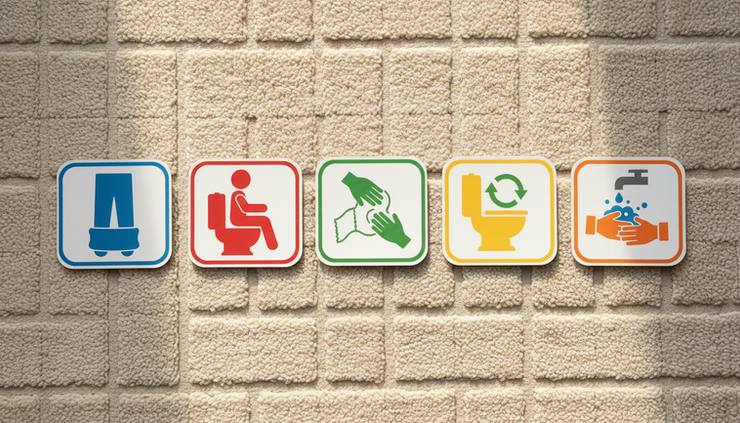
A simple toilet routine may look like this:
Walk to bathroom
Pants down
Sit on toilet
Try pee or poop
Wipe
Pants up
Flush
Wash hands
Keep sits short at first. One to three minutes is often enough for practice. Longer sits can feel like punishment and may lead to power struggles.
Good times to try include:
After waking
Before bath
Before leaving the house
After meals
Before bedtime
Use neutral language. Try “It is toilet time” instead of asking, “Do you need to go?” Many children will say no because they are busy, unsure, or do not want to stop playing.
Praise effort more than results. Say, “You sat with calm feet,” or “You pulled your pants up by yourself.” This builds skills even when nothing lands in the toilet.
Rewards can help, but keep them small and immediate. Stickers, a hand stamp, a high-five, or choosing a song can work well. Avoid taking rewards away for accidents. Accidents are part of learning.
Handle accidents without shame
Accidents give useful information. They may tell you the schedule is off, the child does not feel body signals yet, clothing is too tricky, or the bathroom is too far away.
Respond in a calm, brief way:
“Pee goes in the toilet. Let’s get clean clothes.”
Then guide the child through cleanup at a level they can handle. They might put wet clothes in a hamper, wipe legs, or choose dry underwear. Keep the tone matter-of-fact.
Avoid long lectures. Shame can make children hide accidents or avoid toileting altogether.
If accidents happen often, look for patterns. Are they always during screen time? During outdoor play? Right before dinner? Build toilet sits around those times.
Nighttime dryness is different from daytime training. It depends more on body development, sleep patterns, and hormone rhythms. Many children master daytime toileting before staying dry overnight.
Keep the big picture in mind
Toilet training goes best when adults stay consistent, calm, and flexible. A child may need a potty chair at first, then a toilet insert later. They may succeed at home before trying a public restroom. They may need extra support for poop, wiping, or handwashing.
Watch for signs that more help is needed. Ongoing pain, severe fear, frequent constipation, loss of skills, or no progress after a long period of consistent practice may be a reason to talk with a pediatrician or occupational therapist.
The best trick is not a trick at all. Make the task smaller, support the body, reduce sensory stress, and repeat the same routine with patience. Toileting is a life skill, and steady progress counts.

Comments