
Ways to Raise an Inclusive Kid
- Psyuni Group

- Aug 5
- 5 min read
Kids notice differences early. They see skin color, body size, accents, family structures, disabilities, food, clothing, and who gets included at recess. The question is not whether they will notice. The question is what they will learn those differences mean.
Raising an inclusive kid takes more than telling them to “be kind.” Kindness matters, but inclusion is also a set of habits. It means learning to welcome people, speak up when someone is left out, and stay curious without making others feel like outsiders.
The good news is that these habits can grow in ordinary family life: at the dinner table, in books, on the playground, during playdates, and in the way adults respond to hard questions.

Start by talking openly about differences
Many adults try to teach inclusion by saying, “We are all the same.” The intention is kind, but children can hear that as a reason to ignore real parts of people’s lives.
A stronger message is simple: people are different, and those differences matter in respectful ways.
When a child notices someone using a wheelchair, speaking another language, wearing a head covering, or having a different skin tone, avoid shushing them. A quiet correction can make difference feel shameful. Instead, answer calmly.
You might say:
“Yes, that person uses a wheelchair to move around.”
“Some families speak more than one language.”
“People wear different clothes for culture, faith, weather, comfort, or style.”
“Skin comes in many shades, and all shades are good.”
The goal is not to give a lecture. It is to show that questions can be handled with respect.
If a child says something hurtful, respond clearly without panic. Try, “That word can hurt people. We don’t use it. Let’s talk about what you meant.” This keeps the door open while still setting a firm boundary.
Children learn from tone as much as words. Calm, honest answers teach them that differences are normal, not embarrassing.
Make your home library and media more inclusive
Children build their idea of “normal” from the stories around them. If every hero, family, neighborhood, or classroom in their books looks the same, they absorb that pattern.
Look at the books, shows, toys, music, and games in your home. Ask a few simple questions:
Do the main characters come from different racial and cultural backgrounds?
Do stories include children with disabilities as full characters, not just lessons?
Are there families with single parents, grandparents, adoptive parents, foster families, and LGBTQ+ parents?
Do boys and girls get to show a full range of emotions, interests, and strengths?
Are different religions, languages, and traditions shown with care?
Inclusive media should not only focus on struggle. Kids also need stories where children from many backgrounds have adventures, solve problems, make jokes, feel joy, and lead the story.

When reading together, use open questions:
“What do you notice about this family?”
“How is their school like yours? How is it different?”
“What helped this character feel included?”
These small conversations turn books into practice for real life. They also help raise an inclusive kid who can see beyond one version of childhood.
Model inclusion in everyday choices
Children watch how adults treat people. They notice who gets invited, who gets interrupted, who gets avoided, and who receives patience.
Model inclusion in visible ways. Greet neighbors. Learn names. Speak respectfully about people when they are not present. Invite different classmates to birthday parties or playdates when possible. Choose community events, libraries, parks, and activities where your child can meet people outside a narrow social circle.
Inclusion also shows up in family rules.
For example, if a child says, “Only girls can play that,” you can say, “Toys and games are for anyone who enjoys them.” If a child says, “That lunch smells weird,” you can say, “Different families eat different foods. We don’t make fun of someone’s food.”
These moments may seem small, but they shape a child’s instincts.
It also helps to name what you are doing:
“I’m moving this chair so everyone can sit with us.”
“I’m asking how to say their name correctly because names matter.”
“I’m checking that the game works for everyone before we start.”
That kind of narration teaches children that inclusion is active. It requires attention, flexibility, and care.
Teach kids how to handle exclusion
Every child will eventually see someone left out. They may even be the one doing the excluding. The best time to teach what to do is before the moment becomes emotional.
Give children simple scripts they can use:
“Do you want to play with us?”
“There’s room here.”
“Let’s make a rule everyone can follow.”
“I don’t like that joke.”
“Please say their name the right way.”
These phrases give kids a path forward when they feel unsure.
Role-play can help, especially with younger children. Use stuffed animals, dolls, or made-up playground scenes. Keep it light, but make the practice real.
For older kids, talk through common situations. What if a group chat leaves someone out? What if friends mock someone’s accent? What if a teammate keeps getting picked last? Ask, “What could you do that would help without making things worse?”
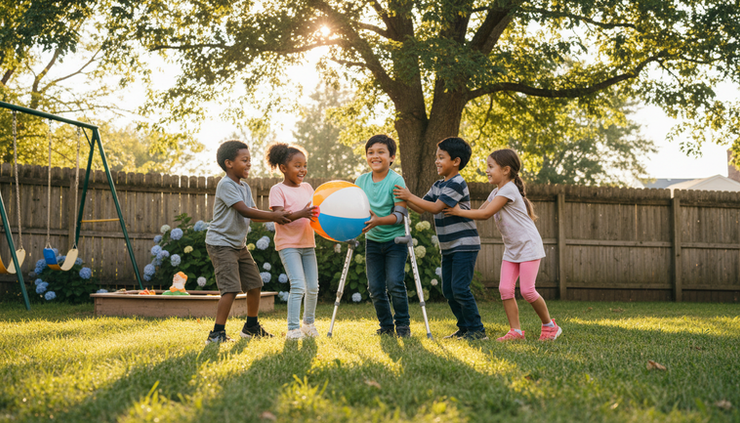
Also teach that inclusion does not mean accepting unsafe behavior. A child can be welcoming and still set boundaries. They can say, “You can play if you stop pushing,” or “I want to include you, but I don’t want to be called names.”
That balance matters. Inclusive kids need both empathy and self-respect.
Be willing to learn and repair
No family gets every conversation right. Adults make assumptions. Kids repeat things they heard. Someone may be left out without anyone noticing at first.
Repair is part of the lesson.
If you say something poorly, name it. “I used the wrong word earlier. I’m going to say it differently.” If your child hurts someone, guide them toward a real apology. Not a forced “sorry” to end the moment, but a repair that shows understanding.
A useful apology sounds like:
“I’m sorry I laughed at your name. That was unkind. I will say it correctly.”
Children also need to see adults learning. Let them know when you are looking up the right term, asking a respectful question, or changing an old habit.
This teaches humility. It shows that inclusion is not about being perfect. It is about caring enough to keep growing.

Small habits can shape a wider heart
Raising an inclusive child happens through repeated choices. Talk openly about difference. Fill your home with many kinds of stories. Model respect in public and private. Give children words for hard moments. Repair mistakes when they happen.
The aim is not to raise a child who never notices difference. The aim is to raise one who notices with respect, responds with care, and understands that everyone deserves belonging.
Start with the next small moment. A question in the grocery store. A book at bedtime. A child alone on the playground. Those moments are where inclusion becomes real.


Comments