
Autism in Preschoolers What It Looks Like and Their Key Needs
- Psyuni Group

- Jul 21
- 6 min read
A 4-year-old who does not answer when called. A 3-year-old who melts down when the usual snack changes. A 5-year-old who plays beside other children, not with them, and seems happiest lining up cars in the same order every day.
These children may all be showing signs of autism, or they may be showing another developmental difference. In preschool, autism can look clear in some children and subtle in others. The goal is not to label every unusual behavior. The goal is to notice patterns, understand what a child may be communicating, and support development with patience and skill.
Autism spectrum disorder is a developmental difference that affects social communication, behavior, sensory processing, and learning in varied ways. During ages 3 to 5, the signs often become more visible because preschool asks children to share space, follow group routines, use language socially, and manage many changes in one day.
This article is for general information only and does not replace medical, developmental, or educational evaluation.

Autism may show up as a pattern, not one single behavior
Autism in preschoolers rarely appears as one isolated sign. Many preschool children have strong preferences, shy moments, tantrums, or delayed skills. What matters is the pattern, how often it happens, how intense it is, and how much support the child needs to take part in daily life.
A preschooler with autism may have differences in several areas at once:
Social communication
Play and imagination
Sensory responses
Flexibility and routines
Emotional regulation
Motor planning or body awareness
Daily living skills
Some children speak in full sentences and still struggle to use language socially. Others use few words, gestures, pictures, or sounds. Some seek hugs and closeness. Others avoid touch or only accept it on their terms. Autism is a spectrum because the mix of strengths and needs can vary widely.
What autism can look like in social communication
Social communication is often one of the first areas adults notice. In preschool, children spend much of the day trying to join play, respond to questions, share attention, and follow group directions. These moments can be harder for autistic children, even when they are bright, curious, and affectionate.
A preschooler may:
Not respond consistently to their name
Use limited eye contact, or use eye contact in brief bursts
Seem unaware when another child wants to play
Pull an adult by the hand instead of pointing or asking
Repeat phrases from shows, songs, or adults
Talk at length about a favorite topic without noticing the listener’s response
Struggle to answer open-ended questions
Use a flat, sing-song, or unusual tone of voice
Have trouble understanding facial expressions, jokes, or pretend roles
Eye contact deserves special care. A child does not need forced eye contact to learn or connect. Some autistic children listen better when they look away. Support should focus on shared attention and understanding, not on making a child appear typical.
Language may be delayed, advanced, or uneven
Some autistic preschoolers have delayed spoken language. They may use single words, scripts, gestures, or sounds to communicate. Others have large vocabularies but struggle with conversation.
A 4-year-old might say, “The penguin lives in Antarctica,” but not answer, “What did you do at school?” Another child may repeat, “Do you want juice?” when they mean, “I want juice.” This kind of repeated language, often called echolalia, can be meaningful communication. It may show what the child wants, remembers, fears, or expects.
Helpful adults listen for the message behind the words.
What autism can look like in play
Play in preschool is not just fun. It builds language, social problem-solving, flexibility, and motor skills. Autistic children may play in ways that are focused, repetitive, sensory-based, or different from expected pretend play.
A child may:
Line up toys, sort them, spin wheels, or watch parts move
Repeat the same play scene many times
Prefer objects over peers
Use toys in unusual but consistent ways
Have limited pretend play, or act out only memorized scenes
Become upset if another child changes the play
Show deep knowledge of a narrow interest
This does not mean the play is “wrong.” Repetitive play can be calming, meaningful, and joyful. The need is to expand play gently, not take away what the child loves.
For example, if a child lines up cars, an adult might add one small step: “The red car is going to the gas station.” If the child accepts that, the adult can pause and wait. If the child moves the car back in line, that is information. The child may need more time, a clearer model, or less interruption.

Sensory differences are often a major part of preschool autism
Many autistic preschoolers process sensory information differently. Sounds, textures, lights, smells, movement, and touch may feel stronger or weaker than expected. These responses are not misbehavior. They are often signs of a nervous system working hard.
A child may be over-responsive to sensory input. They may cover their ears during hand dryers, cry when a shirt tag touches their neck, gag at certain food textures, or panic in a crowded room.
Another child may seek more sensory input. They may crash into cushions, chew sleeves, spin, jump, squeeze into tight spaces, or touch everything. Some children show both patterns in the same day.
Sensory needs can affect nearly every preschool routine:
Preschool moment | What it may look like | Helpful support |
Circle time | Covers ears, wanders, lies down | Offer a quieter spot, movement cushion, or shorter participation |
Art | Avoids glue, paint, or wet textures | Provide tools, gloves, or dry alternatives |
Lunch | Eats only a few foods | Respect safe foods while slowly exploring new ones |
Bathroom | Resists flushing or hand dryers | Warn before sounds, use visual steps, offer noise reduction |
Outdoor play | Runs constantly or avoids equipment | Provide safe movement choices and adult support |
Sensory support should not wait until a child is overwhelmed. A good plan builds regulation into the day.
Emotional regulation needs are real needs
Preschoolers are still learning how to manage big feelings. Autistic preschoolers may need much more support because communication, sensory stress, and unpredictability can all build quickly.
A meltdown is not the same as a tantrum. A tantrum often has a goal, such as getting a toy or avoiding bedtime. A meltdown is usually a loss of control after overload. The child needs safety, reduced demands, and calm support.

Key needs for autistic preschoolers
Autistic preschoolers need the same things all children need: safety, connection, communication, play, learning, and respect. They may need those things delivered in more specific, consistent ways.
They need communication that works now
Speech is valuable, but communication is bigger than speech. A child may need gestures, pictures, sign language, speech-generating devices, objects, or simple choice boards.
Adults should respond to all communication, not only spoken words. If a child hands over a shoe to mean “outside,” that counts. The next step may be modeling, “Outside,” or showing a picture for outside.
They need predictable routines with supported flexibility
A predictable day helps autistic preschoolers feel safe. That does not mean every day must be identical. It means changes are explained in a clear, concrete way.
Flexibility grows best when children feel secure. Surprise changes all day long do not teach flexibility. They often teach fear.
They need sensory accommodations
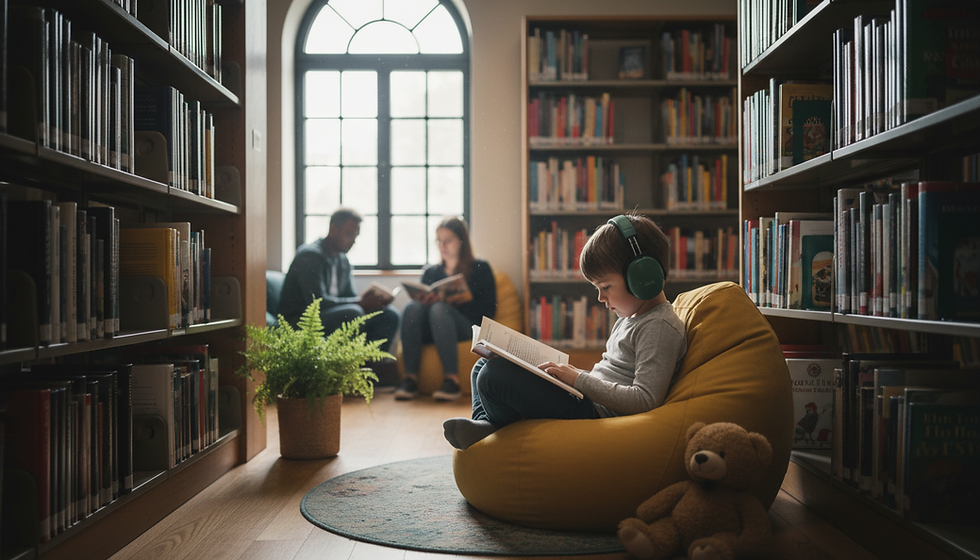
Sensory needs should be treated as access needs, much like glasses help a child see the board. A child may need noise-reducing headphones, chewy tools, movement breaks, softer clothing, a calm space, or different seating.
These supports do not “spoil” a child. They help the child stay available for learning and connection.
They need play support, not play pressure
Autistic preschoolers may need adults to bridge play with peers. This can be done gently. The aim is shared joy, not forced performance.
They need adults to look beneath behavior
Behavior is communication, especially when a child has limited language or poor regulation. Instead of asking, “How do we stop this?” a better first question is, “What is this child trying to handle?” When adults find the need, support becomes more effective.
How autism can be missed in preschool
Some children do not match common stereotypes of autism. They may be talkative, affectionate, imaginative, or eager to please. They may copy other children well enough to get through part of the day, then fall apart at home.
Girls and children with strong imitation skills may be overlooked more often. Children from different language or cultural backgrounds may also be misunderstood if evaluators do not consider the full context. A careful evaluation looks at development, communication, play, sensory needs, adaptive skills, and behavior across settings.
The takeaway for ages 3 to 5
Autism in preschool can look like delayed speech, scripted language, repetitive play, sensory distress, intense interests, trouble with transitions, or difficulty joining peers. It can also look like a bright, verbal child who seems fine until the social and sensory demands become too much.
The key is to look for patterns and respond to needs early. A preschooler does not need to “act autistic enough” to deserve help. If daily life feels harder than it should, support is worth seeking.
The most useful question is simple: What helps this child feel safe, understood, and able to participate? When adults start there, preschool becomes more than a place to manage behavior. It becomes a place where an autistic child can grow with trust, connection, and real support.


Comments