
Supporting a Teenager With Autism and Anger: What Helps and What Makes It Worse

Anger can look like defiance from the outside. For an autistic teenager, it may be the visible part of overload, fear, pain, confusion, shame, or a loss of control.
That does not mean every angry behavior is okay. It means the response needs to do more than “stop the behavior.” Teens need safety, dignity, and skills they can actually use when their brain and body are already flooded.
This article is informational only and not a substitute for medical, mental health, or crisis support. If a teen is at risk of hurting themselves or someone else, seek immediate help from local emergency services or a qualified crisis team.
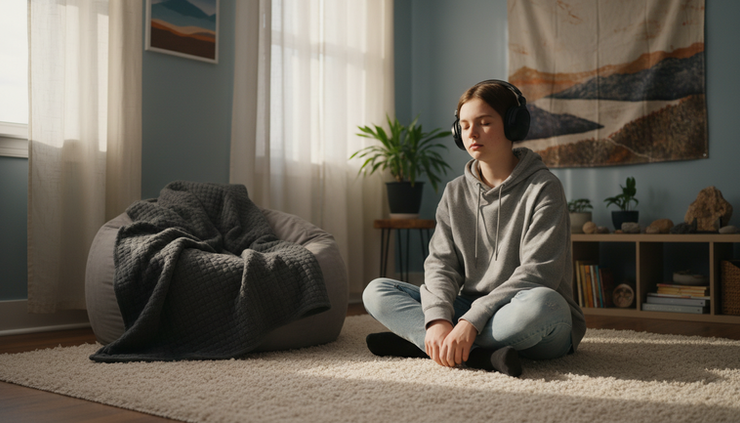
Anger often starts before the outburst
By the time a teen is yelling, swearing, slamming a door, or refusing to move, the anger may have been building for a while.
Common triggers include:
Sensory overload from noise, light, clothing, smells, or crowds
Sudden changes in plans
Too many verbal instructions at once
Feeling misunderstood or accused
Social stress at school
Hunger, poor sleep, illness, or pain
Demands that feel impossible in that moment
For many autistic teens, anger is not a planned choice in the way adults may assume. It can be a nervous system response. The teen may feel trapped, overwhelmed, or unsafe, even when the situation seems small to everyone else.
A useful question is, “What happened before this?” Look at the hour, the day, and the week. A meltdown after homework may really be the result of a loud cafeteria, confusing social drama, a substitute teacher, and no downtime after school.
Supporting a teenager with autism and anger starts with looking for patterns, not blame.
What actually helps in the moment
When anger is rising, the goal is not to teach a lesson. The goal is to reduce danger and lower stress.
Use fewer words. A flooded brain cannot process a speech. Long explanations often sound like more demands.
Try short, calm phrases:
“You are safe.”
“I’m going to give you space.”
“We can talk later.”
“I hear that you’re upset.”
“I’ll move this out of the way.”
Keep your body language low pressure. Stand at an angle rather than directly face-to-face. Give physical space. Avoid blocking the exit unless there is an immediate safety concern.
Lower the environment if possible. Dim bright lights, reduce noise, move siblings away, pause questions, and remove the audience. Many teens calm faster when they do not feel watched.
Offer simple choices, not open-ended questions.
Instead of “What do you need right now?” try:
“Room or porch?”
“Text or talk?”
“Water or no water?”
“Five minutes or ten?”
The choice should be real. Do not offer options that will turn into a power struggle.

What usually makes it worse
Some common adult reactions make anger bigger, even when the adult means well.
What makes it worse | Why it backfires |
Lecturing during the outburst | The teen may not be able to process language well in that state |
Demanding eye contact | Eye contact can add stress and feel confrontational |
Saying “calm down” repeatedly | It gives no practical path to calm |
Taking behavior personally | The adult’s hurt can become the center of the crisis |
Threatening big punishments | Fear can increase fight, flight, or shutdown |
Touching without consent | Even gentle touch may feel unbearable during overload |
Following the teen from room to room | It can remove the teen’s sense of escape |
Bringing up past incidents | Shame can fuel more anger |
One of the hardest parts is not matching the teen’s intensity. A teen may say cruel or shocking things in the moment. That still needs to be addressed, but usually not while the teen is escalated.
If safety allows, wait. Repair works better after the nervous system settles.
After the anger passes, teach without shaming
The window after an outburst matters. Move too fast and the teen may escalate again. Avoid the conversation completely and the pattern may repeat.
Wait until the teen is regulated. That may be 20 minutes later, later that evening, or the next day.
Start with low blame and clear facts.
“You were really overwhelmed when homework started. You threw the pencil, and it scared your sister. We need a safer plan for next time.”
Then problem-solve together. The goal is not to force an apology before understanding what happened. The goal is to build a plan the teen can use.
Helpful questions include:
“What was the first sign you were getting overloaded?”
“What did adults do that helped?”
“What made it worse?”
“What can you do next time before it gets that big?”
“What should I do if I see the warning signs?”
Some teens talk better while walking, drawing, texting, or sitting side by side. Spoken face-to-face conversations can feel too intense.
Create a written plan if possible. Keep it simple:
Early signs
Pacing, louder voice, covering ears, saying “leave me alone.”
Helpful actions
Reduce talking, offer headphones, pause demands, give space.
Unsafe actions
Hitting, throwing hard objects, blocking doors.
Repair steps
Check on anyone scared or hurt, replace damaged items when possible, reset the space.

Prevention works better than crisis control
The best anger support often happens outside the angry moment.
Protect recovery time after school or social events. Many autistic teens hold themselves together all day, then fall apart at home where they feel safe enough to release it. That does not make the home behavior acceptable, but it does explain why downtime matters.
Make routines visible. Calendars, text reminders, and written checklists can reduce the stress of surprise. Give warnings before transitions when you can.
Watch basic body needs. Sleep, food, hydration, movement, and pain all affect emotional control. If anger changes suddenly or becomes more intense, consider whether anxiety, depression, bullying, medication side effects, migraines, digestive issues, or other health concerns could be involved. A doctor or licensed therapist can help sort that out.
Teach regulation skills when the teen is calm. Breathing exercises, sensory tools, scripts, breaks, and movement work best when practiced before they are needed.
Also teach adults the plan. A teen should not have to explain their needs from scratch in the middle of overload.
Boundaries still matter
Compassion does not mean accepting unsafe behavior. Teens need both understanding and limits.
A clear boundary sounds like this:
“I won’t let you hit me. I’m moving back to keep us both safe. We can talk when your body is calmer.”
That is different from, “You’re being ridiculous. If you do that again, you lose everything.”
Good boundaries are firm, brief, and focused on safety. They do not humiliate the teen. They do not turn the moment into a contest.
When consequences are needed, connect them to repair and safety. If something breaks, the teen may help clean up or replace it when calm. If a sibling was scared, the repair may involve giving space, writing a note, or helping restore trust over time.
The goal is responsibility without shame.
The real measure of progress
Progress may not look like anger disappearing. It may look like a teen going to their room instead of throwing something. It may look like texting “I can’t talk” instead of screaming. It may look like a shorter recovery time, fewer injuries, or more honest conversations afterward.
Those changes count.
Support works best when it protects dignity, lowers overload, and teaches usable skills. Stay curious about the trigger, calm in the moment, and clear about safety. Anger is a signal. When adults respond to the signal instead of just reacting to the noise, the teen has a better chance to feel understood and learn a safer way through.


Comments