
OT Milestones to Look For at 12 to 15 Months

Between 12 and 15 months, toddlers often change fast. One week they are dropping toys from the high chair. The next, they are trying to stack blocks, feed themselves, or climb onto the couch. Occupational therapy, or OT, looks at how these everyday skills build independence, play, movement, and confidence.
Milestones are helpful, but they are not a strict checklist. Some children master skills a little earlier or later. The goal is to notice patterns, support practice, and know when extra help may be useful.
This article is for general information only. If there are concerns about development, feeding, movement, or sensory responses, talk with a pediatrician or a licensed occupational therapist.
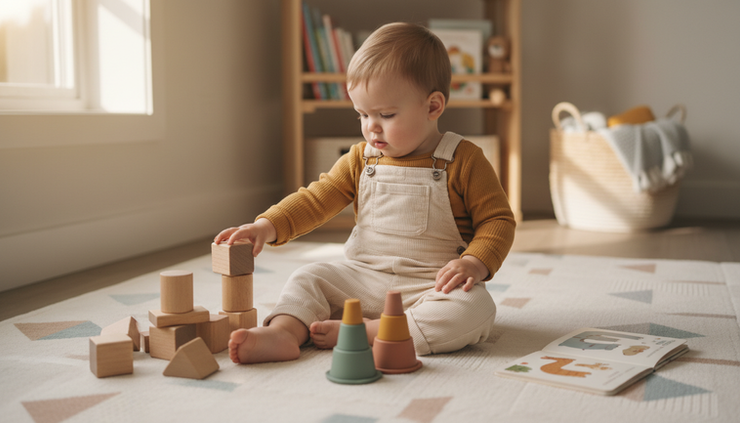
Why OT milestones matter at this age
Occupational therapy milestones focus on the skills children use during everyday routines. For a toddler, “occupation” means things like playing, eating, moving around the home, helping with dressing, and exploring safely.
At 12 to 15 months, many toddlers are working on:
Fine motor control
Using hands and fingers with more purpose.
Visual motor skills
Coordinating what the eyes see with what the hands do.
Self-feeding
Picking up food, drinking from a cup, and using utensils with help.
Sensory processing
Responding to touch, sound, movement, and textures.
Play skills
Exploring toys in more organized and meaningful ways.
Early independence
Helping with dressing, cleanup, and simple routines.
A child does not need to do every skill perfectly. At this age, effort matters. A toddler who tries, experiments, and improves over time is showing important growth.
Fine motor skills to watch from 12 to 15 months
Fine motor skills help toddlers use their hands for play, feeding, and daily tasks. During this stage, many children begin to use more controlled finger movements instead of grabbing everything with the whole hand.
Common fine motor milestones include:
Picking up small foods with the thumb and pointer finger
Placing objects into a container
Taking objects out of a container
Turning pages in a board book, often several pages at once
Stacking one or two blocks
Pointing with an index finger
Clapping, waving, or reaching to request
Holding a crayon with a full-hand grasp and making marks
Trying to put a large puzzle piece into place
These skills may look messy. A toddler might dump a basket ten times before placing one toy back inside. That still counts as learning. Repetition helps the brain and hands work together.
Good activities for this stage include shape sorters, chunky puzzles, nesting cups, large crayons, pop beads, and blocks. Keep pieces large enough to avoid choking hazards, since toddlers still explore with their mouths.

Self-feeding and dressing skills are part of OT too
Eating is one of the biggest daily routines where OT skills show up. Around 12 to 15 months, many toddlers want to do more by themselves, even when that means a larger mess.
At this age, a toddler may:
Finger-feed soft foods with better accuracy
Bring a spoon to the mouth, with spills
Hold a small cup with both hands
Drink from a straw cup or open cup with help
Bite and chew soft table foods
Show likes and dislikes for textures
Help wash hands by placing hands under water
Push arms through sleeves with help
Pull off socks or a loose hat
Messy eating is normal. It gives toddlers sensory information about temperature, texture, smell, and pressure. A child may squish banana, smear yogurt, or drop peas before eating them. That kind of exploration can support comfort with food.
Still, feeding concerns deserve attention. Talk with a pediatrician if a toddler often coughs or chokes during meals, refuses most textures, struggles to chew, loses weight, or seems distressed at nearly every meal.
Movement and sensory milestones support daily routines
OT also looks at how the body handles movement and sensory input. A toddler’s balance, posture, and body awareness affect how they play, eat, and move through the day.
Between 12 and 15 months, many children are learning to:
Stand alone for short periods
Walk with or without support
Squat to pick up a toy and stand again
Crawl up stairs with close supervision
Climb onto low furniture safely with help nearby
Carry a toy while walking
Push or pull a toy while standing
Dance, bounce, or sway to music
Sensory skills are harder to measure, but they matter. A toddler may enjoy being rocked, hugged, tickled, or swung. Another may need more time to warm up to those sensations.
Some sensory reactions are common at this age. Many toddlers dislike hair washing, tooth brushing, diaper changes, or loud appliances. The concern grows when responses are intense, frequent, and interfere with everyday life.
For example, a child who cries briefly during tooth brushing may simply need practice and a gentler routine. A child who panics every time a toothbrush comes near the mouth may need extra support.

Play and early problem-solving give the clearest clues
Play is one of the best ways to see development. Toddlers show what they understand by how they explore, imitate, and solve small problems.
At 12 to 15 months, play may include:
Dropping toys into containers
Pushing toy cars or rolling balls
Looking for a hidden toy
Copying simple actions, like stirring with a spoon
Pretending to talk on a toy phone
Handing a toy to an adult for help
Pressing buttons to make sounds or lights happen
Trying different ways to make a toy work
Cause-and-effect play is especially common. A toddler learns, “When I push this, something happens.” This lays the groundwork for problem-solving and attention.
Simple pretend play may also begin. A child might brush a doll’s hair, offer a cup to a stuffed animal, or hold an object to the ear like a phone. These small actions show growing memory, imitation, and social awareness.
When to ask for extra support
Every child develops at a different pace, but some signs are worth discussing with a professional. Early support can make daily routines easier and reduce frustration.
Consider asking about an OT referral if a child:
Uses one hand much more than the other before 18 months
Has very stiff or very floppy muscle tone
Cannot bring hands together at midline
Rarely points, reaches, or uses gestures
Does not pick up small pieces of food
Struggles to sit, stand, or move in and out of positions
Avoids touching many common textures
Has extreme distress with dressing, bathing, tooth brushing, or feeding
Does not explore toys in varied ways
Loses skills they previously had
One missed milestone does not always mean there is a problem. A pattern of difficulty is more meaningful. Trust observations from everyday routines, because those moments often tell the clearest story.

How to support OT skills at home
Toddlers learn best through short, playful practice. Daily routines already offer plenty of chances.
Try these simple ideas:
Let the child help put toys into a bin
Offer safe finger foods during meals
Read board books and let the child turn pages
Sing songs with gestures, like clapping and waving
Give large crayons for scribbling
Play with containers, cups, blocks, and balls
Encourage climbing on safe, low surfaces with supervision
Let the child help pull off socks or push arms through sleeves
Keep practice low-pressure. If a toddler gets frustrated, make the task easier or model it again. Praise effort, not just success.
A helpful goal is to build skills inside normal routines. A few minutes of practice during snack, bath, playtime, and dressing can add up quickly.
The 12 to 15 month stage is full of trial and error. Look for growing curiosity, better hand use, more movement, and small signs of independence. Those everyday moments are the real milestones.


Comments